
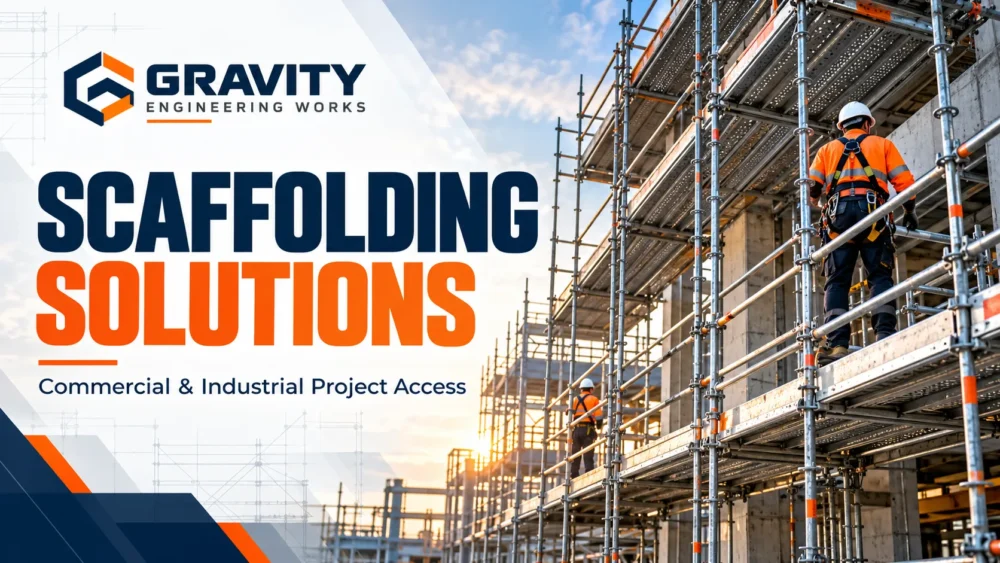
Scaffolding Solutions for Complex Project Access
With the appropriate scaffolding solutions, however, the difference between safe passage at different elevations, tight spaces, or difficult-to-access locations can be immense. For the contractor or facility manager responsible for project management, the choice of scaffolding goes beyond just height considerations.
For those seeking guidance on determining what is needed in terms of scaffolding solutions for their commercial or industrial projects, Gravity Engineering Works can assist you through the process. This document will outline some of the basics.
What Are Scaffolding Solutions?
“Scaffolding” is a system of temporary supports and access platforms that facilitate worker access to high work levels. The proper choice of the system depends on the nature of the project, work level, geometry of the structure, access needs, available space, etc.
There is no one-size-fits-all system of scaffolding.
Why the Right Scaffolding System Matters?
Scaffolding affects how crews move, work, and access different areas of a project.
A suitable scaffold system can support:
- Better access to changing elevations
- Clearer work zones
- More efficient movement around a site
- Improved material handling
- Practical platform positioning
- Coordination with other trades
- Easier installation and dismantling planning
The right choice should reflect the actual site rather than relying on a standard setup for every project.
Common Types of Scaffolding Solutions
Different projects may require different access systems.
Frame Scaffolding
Frame Scaffolding is widely utilized for simple commercial building projects and exterior work. It consists of pre-fabricated frame assemblies joined together by braces and platforms.
This system could be appropriate for projects that have fairly similar access needs and do not have complex geometry.
System or Modular Scaffolding
Scaffolding system employs standardized and modular parts which can be combined into various setups.
This could prove effective in cases like industrial plant sites, non-uniform configurations, maintenance operations, or situations involving varied accessibility at various elevations or locations.
Mobile Scaffold Towers
A mobile scaffold tower can serve as movable scaffolding in cases where temporary access is required.
This could include maintenance, finishing, interior work, or any other job that requires access to various sites without setting up a fixed scaffold.
Suspended Scaffolding
Suspended scaffolding can be used in situations involving external façades work, high-rise maintenance, painting, inspection, etc., when access from above is needed.
Whether the suspended scaffolding is applicable depends on the building.
Customized Scaffolding Configurations
There are certain buildings where the use of a conventional scaffolding system is not effective.
This could be due to a limited space, unusual shape of the structure, different levels, hindrances from the machinery or unusual access point.
How Do You Choose the Right Scaffolding Solution?
The right scaffold system depends on the project scope, work area, site conditions, height, access requirements, and how crews need to move around the structure.
Key factors include:
- Project type
- Structure height
- Site dimensions
- Working elevations
- Restricted spaces
- Surface and ground conditions
- Required platform areas
- Material movement
- Project duration
- Installation and dismantling logistics
- Applicable project safety requirements
- Site-specific constraints
A site assessment helps determine which configuration is most practical for the work being performed.
Why Professional Scaffold Planning Matters ?
Scaffold planning plays a key role in ensuring that the access strategy is well coordinated with how the project will be completed.
Scaffold planning can include examining access points, placement of platforms, sequence of installation, logistics at the site, and coordination with other crafts on the project.
It may also assist project crews in avoiding unnecessary conflicts between scaffold erection and project completion.
With changing phases of the project, scaffold needs may also change.
Where Are Scaffolding Solutions Used?
Scaffolding is used across a wide range of commercial and industrial applications.
Common examples include:
- Commercial construction
- Building renovation
- Exterior façade work
- Industrial maintenance
- Warehouses
- Plant maintenance
- Infrastructure-related projects
- Structural repair
- Painting and finishing
- Equipment installation
- Building maintenance
The most suitable system depends on the structure, site, and work being completed.
When Does a Project Need a Custom Scaffolding Solution?
When the access equipment required to be installed on the site does not fit the site properly, a custom-designed scaffold can be a better choice.
Such a situation can arise if the structure of the project is irregular, ground space is limited, the point of access is difficult, there is heavy machinery present, or if there are different levels of operation involved.
What to Look for in a Scaffolding Solutions Provider ?
Choosing a scaffolding provider is a commercial decision that should consider planning, communication, and project coordination.
Look for a provider that can:
- Understand the project scope
- Discuss suitable scaffold options
- Review site-specific requirements
- Explain installation considerations
- Provide a clear scope of work
- Coordinate with project stakeholders
- Discuss schedules and responsibilities
- Provide relevant technical documentation where appropriate
- Support changing access requirements during the project
Transparent communication is especially important where multiple contractors and trades are working on the same site.
Why Consider Gravity Engineering Works for Scaffolding Solutions?
The company Gravity Engineering Works can help with analyzing the needs of project teams when assessing scaffolding needs on their project.
The emphasis needs to be on analyzing the project, including its access needs, working areas, elevations, site restrictions, and the nature of work that will take place.
Instead of having a cookie-cutter approach to each project, a discussion about the project may allow us to analyze some viable options for scaffolding.
When comparing scaffolding systems for your next project, Gravity Engineering Works can help you with discussing your access requirements.
Frequently Asked Questions
What are scaffolding solutions?
Scaffolding solutions are temporary access and work-platform systems used to help crews reach elevated or difficult work areas. The correct system depends on project height, site dimensions, structure geometry, work zones, access requirements, and installation conditions.
What type of scaffolding is best for a construction project?
There is no single scaffold type that is best for every construction project. The right system depends on factors such as structure height, available space, access needs, project duration, work areas, and building geometry. A site-specific assessment is generally the best way to determine a suitable configuration.
What is the difference between frame scaffolding and system scaffolding?
Frame scaffolding typically uses prefabricated frames and braces and is often suited to straightforward access requirements. System scaffolding uses modular components that can be arranged in different ways, making it useful for more complex structures, industrial environments, or changing access needs.
Can scaffolding be customized for complex structures?
Yes. Projects with irregular geometry, multiple elevations, restricted spaces, existing equipment, or difficult access points may require a customized scaffold configuration. The final setup should reflect the actual site conditions and work requirements.
What factors should be considered before scaffold installation?
Important factors include structure height, site dimensions, access points, ground conditions, work-platform needs, material movement, project duration, installation sequence, dismantling logistics, and applicable project safety requirements. The exact considerations vary depending on the job site.
Where are commercial scaffolding solutions commonly used?
Commercial scaffolding solutions may be used for new construction, renovations, exterior work, façade access, maintenance, painting, structural repairs, warehouses, and installation projects. The right system depends on the building, work area, and project requirements.
How do I choose a scaffolding solutions provider?
Consider whether the provider understands the project scope, communicates clearly, discusses site-specific needs, explains scaffold options, defines responsibilities, and can coordinate with other stakeholders. Transparent planning and a clear project scope are important when evaluating providers.