
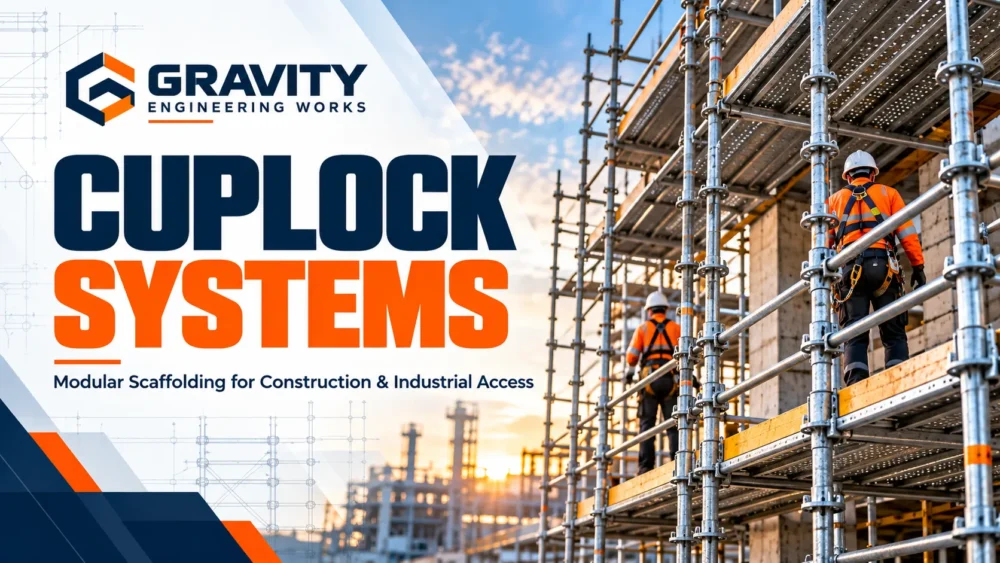
Cuplock Systems for Modular Construction Access
Cuplock scaffolding becomes a sensible choice for projects that require regular access from different heights or at different sites. This is because of their modularity that enables them to be used in various types of scaffolding arrangements based on the type of structure being worked on.
Buyers interested in finding out their cuplock scaffolding requirements can consult Gravity Engineering Works. This article discusses the working mechanism of the scaffolding, the major parts involved, the applications of cuplock scaffolding and things to consider when purchasing such systems.
What Are Cuplock Systems?
Cuplock is a type of modular scaffold system wherein the standards and ledgers can be interconnected through a lockable cup mechanism. In such a way, the scaffold structure can be put up in a repetitive bay form according to varying heights and other needs.
It all depends on the project and location.
How Does a Cuplock Scaffolding System Work?
The cuplock scaffolding system consists of standards for uprights and ledgers for joining these standards together.
Cuplock connections provide the means of securing the compatible horizontal members using a cup-like design.
Base members define the scaffold structure at ground level, while platforms form the working areas.
Based on the particular setup, braces, access units, guardrail members, and other accessories can be incorporated into the structure.
This modular way of connecting the scaffold bay members makes it possible to reproduce them independently from the particular type of the connector fittings.
Main Components of a Cuplock Scaffold System
Standards
The standards are the vertical structural pieces that form the major scaffold grid structure. They give the upright support structure to the whole structure.
Ledgers
Ledgers are horizontal members that connect between standards and help define scaffold bays.
Cup Connections
Cup connections act as the connection that binds the verticals and horizontals together. They help to form the modular joint unique to cuplock scaffolding.
Base Jacks or Base Components
Base elements provide the scaffold structure with its base at the ground level. The adjustable elements may also be helpful when required.
Platforms or Decks
Platforms and decks create the working surfaces used by crews within the scaffold structure.
Bracing and Access Components
Depending on the system and project, braces, stairs, ladders, guardrail-related components, or additional access units may be incorporated.
Why Are Cuplock Systems Used on Construction Projects?
Cuplock systems are used because their modular format can support repetitive scaffold layouts while also allowing configuration changes across different areas of a project.
Potential practical benefits include:
- Repeatable connection points
- Modular scaffold layouts
- Adaptability across multiple elevations
- Multiple work-platform levels
- Suitability for larger scaffold arrangements
- Potential usefulness around complex structures
- Easier organization of scaffold bays
- Ability to adjust layouts as project phases change
The actual benefit depends on the project, crew, system, and site conditions
Where Are Cuplock Scaffolding Systems Commonly Used?
Cuplock scaffolding may be considered for a range of construction and industrial applications, including:
- Commercial construction
- Industrial facilities
- Infrastructure projects
- Building renovations
- Plant maintenance
- Exterior access
- Structural work
- Multi-level work areas
- Temporary access platforms
- Maintenance environments
It may also be used in certain formwork-support applications where the system and project design are suitable.
Cuplock Systems vs Frame Scaffolding: What Is the Difference?
The Cuplock scaffolding consists of modular vertical and horizontal elements having fixed connection points that allow different scaffold arrangements to be created.
Frame scaffolding can involve pre-fabricated welded frames linked together through cross braces and platforms. It could be appropriate for simple access arrangements.
Both methods are not necessarily superior. It depends on many factors including project geometry, working height, accessibility, and required time period.
What Should You Consider When Selecting a Cuplock System?
Selecting a suitable system starts with understanding the actual project requirements.
Important factors include:
- Structure dimensions
- Required working elevations
- Scaffold layout
- Platform needs
- Ground and base conditions
- Site access
- Integration with other trades
- Erection and dismantling requirements
- Transport and storage considerations
- Component compatibility
- Applicable project requirements
- Supplier or manufacturer documentation
Actual scaffold configuration should be based on project-specific conditions rather than generic assumptions.
Can Cuplock Systems Be Used for Complex Structures?
Yes, a modular cuplock system can potentially be configured around varied elevations, layouts, and structural geometry, depending on the specific system and project requirements.
This may include:
- Irregular structures
- Multiple working levels
- Restricted spaces
- Large façade areas
- Industrial equipment
- Maintenance zones
Complex access requirements should be assessed carefully so the scaffold layout fits the structure and work sequence.
What to Look for in a Cuplock Systems Supplier?
B2B buyers should evaluate more than product availability.
Consider whether a supplier can provide:
- Clear product information
- Component compatibility information
- Technical documentation where applicable
- Transparent project scope
- Consistent communication
- Relevant component availability
- Logistics information
- Support during planning discussions
- Verified quality-control information where available
The supplier should also understand the project requirements well enough to discuss suitable system options without making unsupported technical claims.
Why Consider Gravity Engineering Works for Cuplock Systems?
Gravity Engineering Works may be able to help customers considering various modular scaffolding alternatives for their construction and industrial access needs.
Project-specific discussions may be able to shed light on parameters like structural geometry, work area needs, access needs, and more.
In case of cuplock comparisons among various contractors, procurement staffs, and project managers, Gravity Engineering Works may be able to contribute to the discussion.
Frequently Asked Questions
What is a cuplock system?
A cuplock system is a modular scaffold system that typically uses vertical standards and horizontal ledgers connected through cup-style locking points. The system can be arranged in different scaffold layouts depending on access needs, project geometry, working elevations, and site conditions.
How does cuplock scaffolding work?
Cuplock scaffolding uses vertical standards connected by horizontal ledgers through cup-style nodes. The modular connection creates repeatable scaffold bays, while platforms, base components, bracing, and access units may be added depending on the project configuration.
What are the main components of a cuplock scaffold?
Typical components include standards, ledgers, cup connections, base jacks or other base components, platforms, decks, bracing, and access units. The exact components used depend on the scaffold system, project requirements, and selected configuration.