
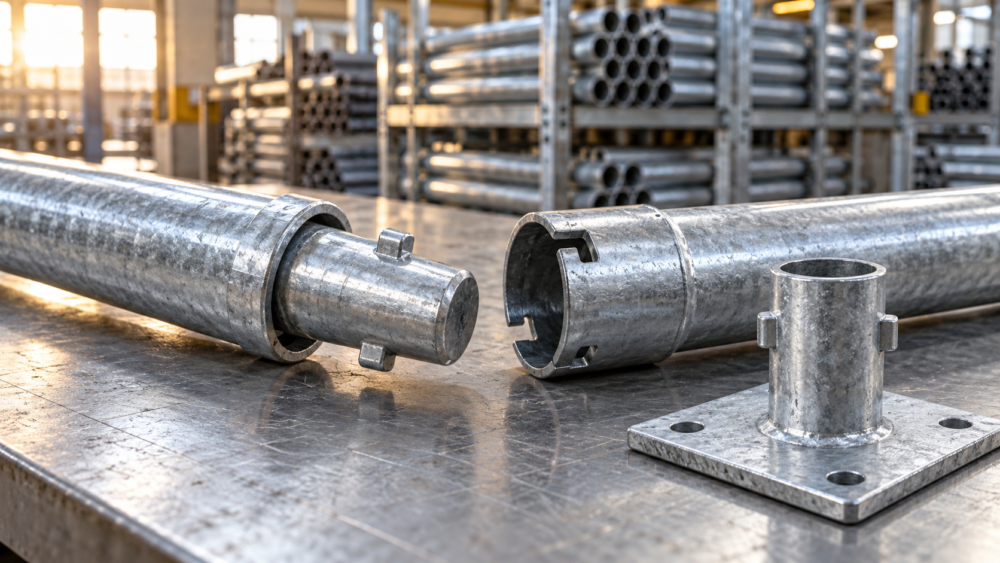
Choosing suitable scaffolding components begins with understanding how they fit into the complete system. A twist lock system uses purpose-designed connections to join compatible members, helping create configurations suited to particular project requirements. However, product names alone cannot establish compatibility or load capacity.
Gravity Engineering Works lists twist lock scaffolding within its product range, including tube locks and base plates. For contractors, distributors and procurement teams, understanding these components helps make enquiries clearer and purchasing decisions more informed. Gravity Engineering
What Is Twist Lock Scaffolding?
Twist lock scaffolding is a system of tubular members and associated connections used in temporary construction arrangements. Depending on the design, interlocking tube connections work alongside clamps and other specified accessories to connect the required members.
The exact connection method varies between products. Buyers should therefore request the manufacturer’s drawings and instructions rather than assume that every twist lock component operates identically. A familiar appearance does not confirm that two parts belong to the same system or can perform the same function. dss.net
Twist Lock Components at Gravity Engineering Works
Gravity Engineering Works identifies two products within its twist lock category: Twist Lock Tube Lock and Twist Lock Base Plate. Its website describes the range in connection with scaffolding requirements for the USA and Canadian markets.
When enquiring about a tube lock, ask for details of the connection geometry, intended mating components and available dimensions. For a base plate, request its dimensions, connection details and intended use within the selected arrangement.
These details help buyers distinguish between a suitable replacement part and a component that merely looks similar. Confirm the current specifications directly with the supplier before finalising an order.
Where Can Twist Lock Systems Be Considered?
Twist lock systems can be considered where a project calls for compatible tubular scaffolding connections. Gravity’s product page discusses connections involving braces, horizontal rails and other scaffold-related arrangements. Suitability still depends on the actual system design and application.
Before selecting components, define the intended project clearly. Include the arrangement, connection requirements, site conditions and whether the order is for new equipment or replacement stock.
For distributors, identifying the target system and market is equally useful. A clear product specification reduces uncertainty when comparing quotations, checking samples and preparing inventory for customers.
What Should Buyers Check Before Ordering?
Start with compatibility. Provide drawings, existing part references or measurements so the supplier can identify the requested component accurately. Do not treat a matching tube diameter as complete evidence of suitability.
Next, confirm the material specification, finish, dimensional tolerances and available technical documentation. Ask which test reports apply to the exact product being quoted, rather than relying on general statements about the wider range.
Also discuss quantities, packaging, delivery requirements and sample availability. A quotation becomes easier to evaluate when each supplier responds to the same written specification. Keep approved drawings and purchase details together for future repeat orders.
Why Compatibility and Documentation Matter
Scaffolding performance depends on the complete assembly, including its connections, supports and configuration. An individual component cannot establish the capacity of the entire structure.
For US construction work, OSHA places conditions on mixing scaffold components from different manufacturers, including fit and structural integrity. Components must not be modified merely to make an incompatible combination fit unless the applicable requirements are satisfied.
For procurement teams, the practical lesson is to resolve compatibility questions before purchase. Obtain the appropriate technical review and retain the relevant documentation, especially when replacing parts in an existing fleet.
Inspection and Ongoing Care
Inspection remains necessary throughout a scaffold’s working life. In US construction applications, OSHA requires inspection for visible defects by a competent person before each work shift and after events that could affect structural integrity. Damaged or weakened components require appropriate action.
Follow the manufacturer’s instructions for handling, cleaning and storage. Keep component identification available and separate questionable parts from usable stock until they have been assessed. Organised storage also makes counting, dispatching and checking repeat orders more straightforward.
Discuss Your Requirements with Gravity Engineering Works
Gravity Engineering Works offers scaffolding products alongside fasteners, bolts and other engineering components. Its listed scaffolding range includes twist locks, ringlock systems, cuplock systems, screw jacks, couplers and formwork accessories.
For a focused enquiry, share the component name, required quantity, drawings and delivery destination. Ask the team to confirm available specifications and supporting documents for your application.
Explore the Twist Lock range or contact Gravity Engineering Works to discuss your sourcing requirements.
Phone/WhatsApp: +91 91159-42100
Email: sales@gravityengineeringworks.com